
Alien Fear
On the Importance of Close Encounters

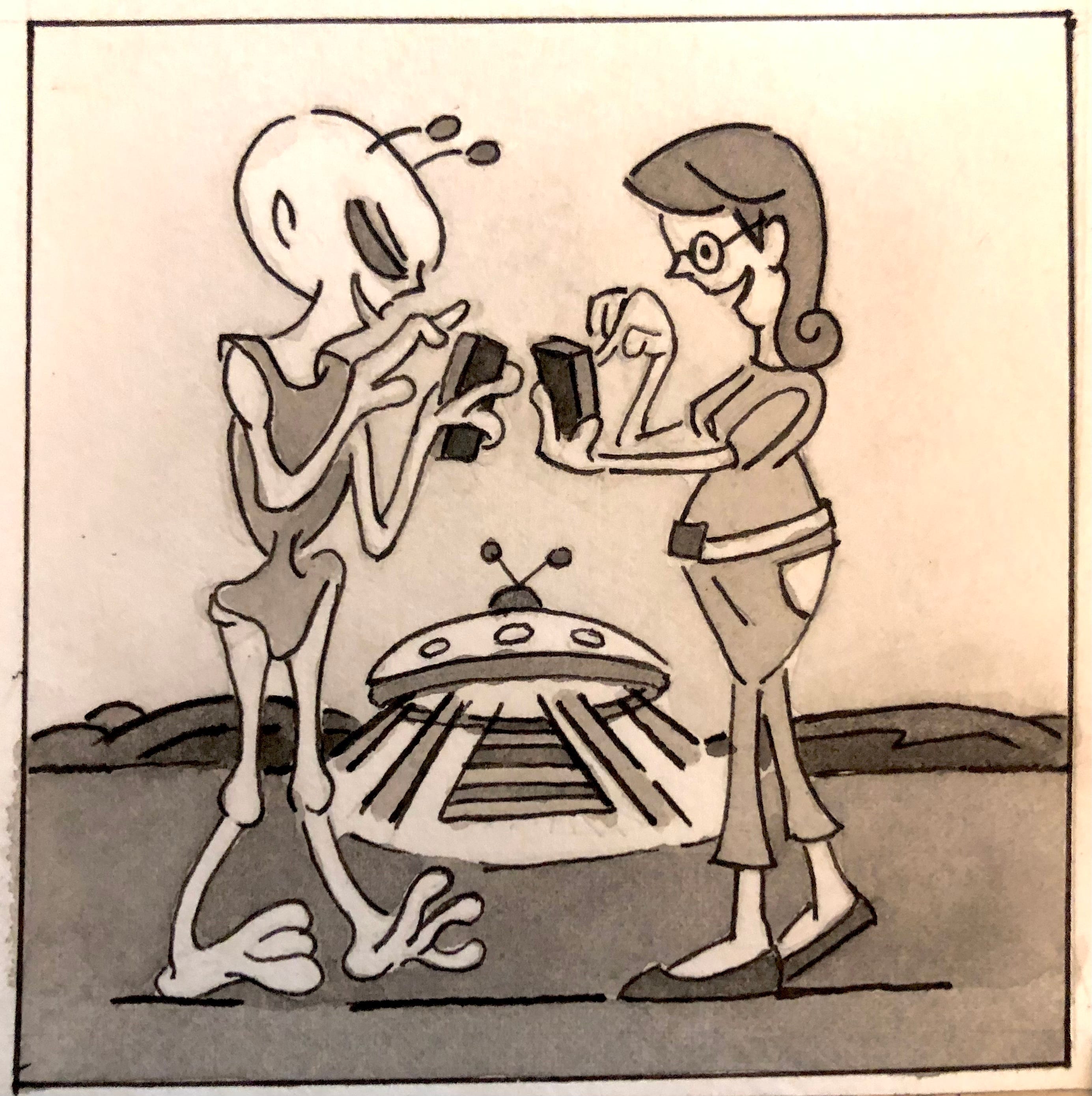
My contact with the alien came—as they commonly do—at dusk on a dirt road in the Mojave Desert.
It was July 1979, just around the time of the Stamford Connecticut sighting, where 27 witnesses had seen the red ball of light hovering over the city.
I was a college student working as a grunt, go-fer, and clean-up man on a construction crew in Lake Havasu City, Arizona. I had just finished cleaning a job site. I had driven out to the city dump and had unloaded the trailer, which was full of leftovers from the job—pieces of sheet rock, 2 X 4’s, roofing tiles, and whatnot.
I was driving my boss’s Ford pickup with the windows open, the empty trailer bumping down the long dirt road back to the highway.
The sun was setting on the far, California side of the lake, behind the Whipple Mountains, so I pulled over.
Sunsets in the Mojave are always worth watching. They are full of tricksy colors—golds and yellows merging with reds and oranges turning to pinks and purples. It’s easy to believe extraterrestrial life lies hidden behind such a curtain of color.
Suddenly, there was a strange clicking sound, then a flash of bright green. I looked down, and the alien was sitting in my lap.
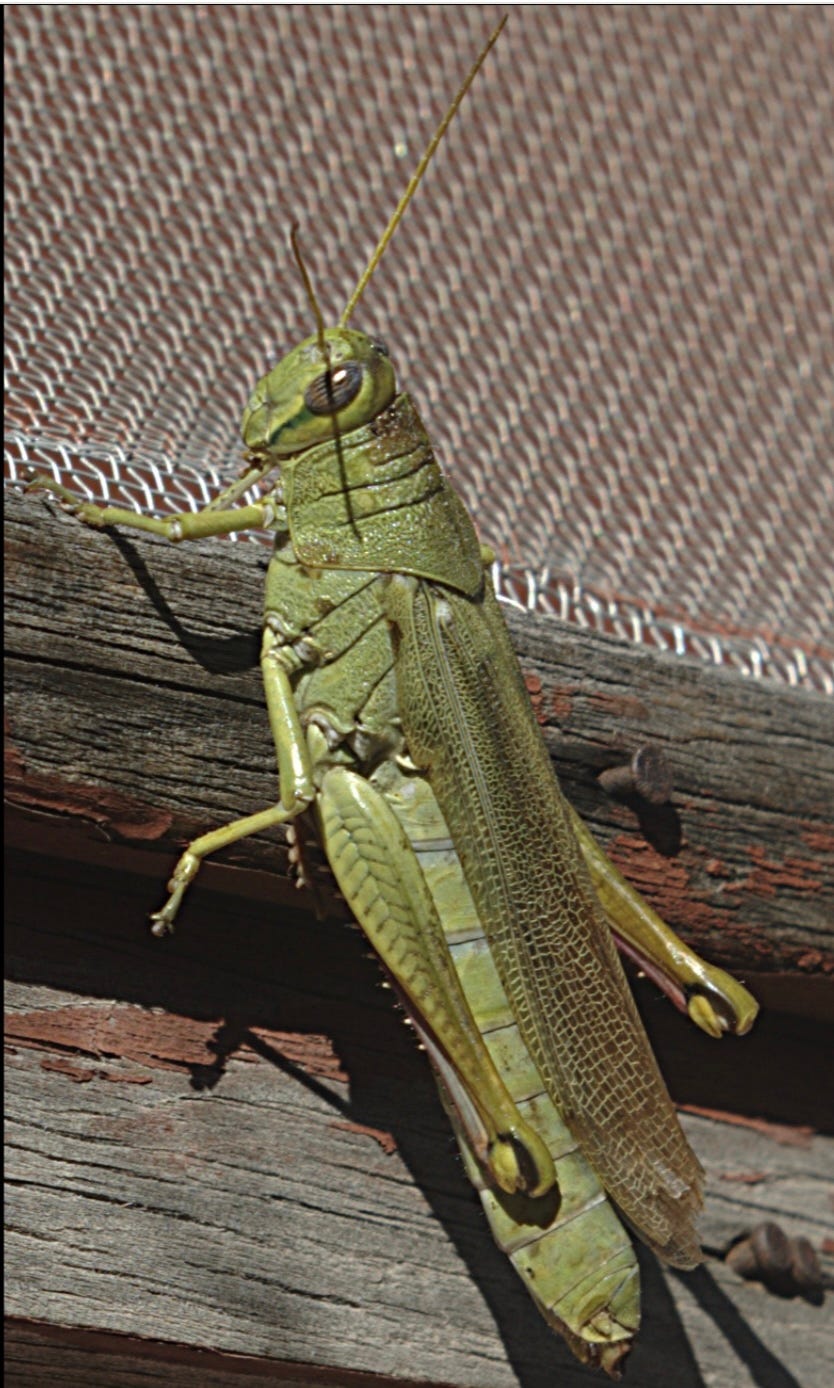
I froze in terror.
Fear of grasshoppers. Acridrophobia. That’s what the psychologists call it (saying it in Greek does not make the discomfort go away).
Unless it joins up with a billion others of its kind to lay waste to the corn, a grasshopper is a completely harmless fellow.
So the fear is utterly irrational.
I certainly can’t trace it back to any traumatic experience. As far as I know no grasshopper terrorized me as a child, mouthing insectoid obscenities over my cradle.
But when this creature landed in my lap and began walking up my leg, I was petrified. Immobilized by fear.
All I could do was watch as it began moving up my body, exploring me like I was some kind of alien planet. With its capsule head segmented into armored plates, it looked like a space voyager; the saddle-like shield behind its head seemed like the armored cape of some extraterrestrial warrior priest.
The smooth black domes of its eyes, its intrusive feelers, its jointed legs creeped me out, but its hard exoskeleton—and the dry sound of the four wings brushing against it—disgusted me.
In humans the skeletal framework is hidden away; we’re covered in soft flesh. But in grasshoppers the boney structure is turned inside out. What’s left within is just a soup of organs and blood. The texture of the thing is just wrong.
Just when the creature reached my torso, it suddenly jumped—right out the window—opened its wings and took off like a bird into the blazing desert sky.
I don’t know what unconscious fears I project onto innocent grasshoppers (in this case, a Green Bird Grasshopper of the Mojave). No doubt I made it bear all sorts of adolescent anxieties.
The unpredictable jumping freak must be a stand-in for everything outside my comprehension and control.
Still, if a person is not a little afraid of grasshoppers, that person—IMHO—is not looking carefully enough.
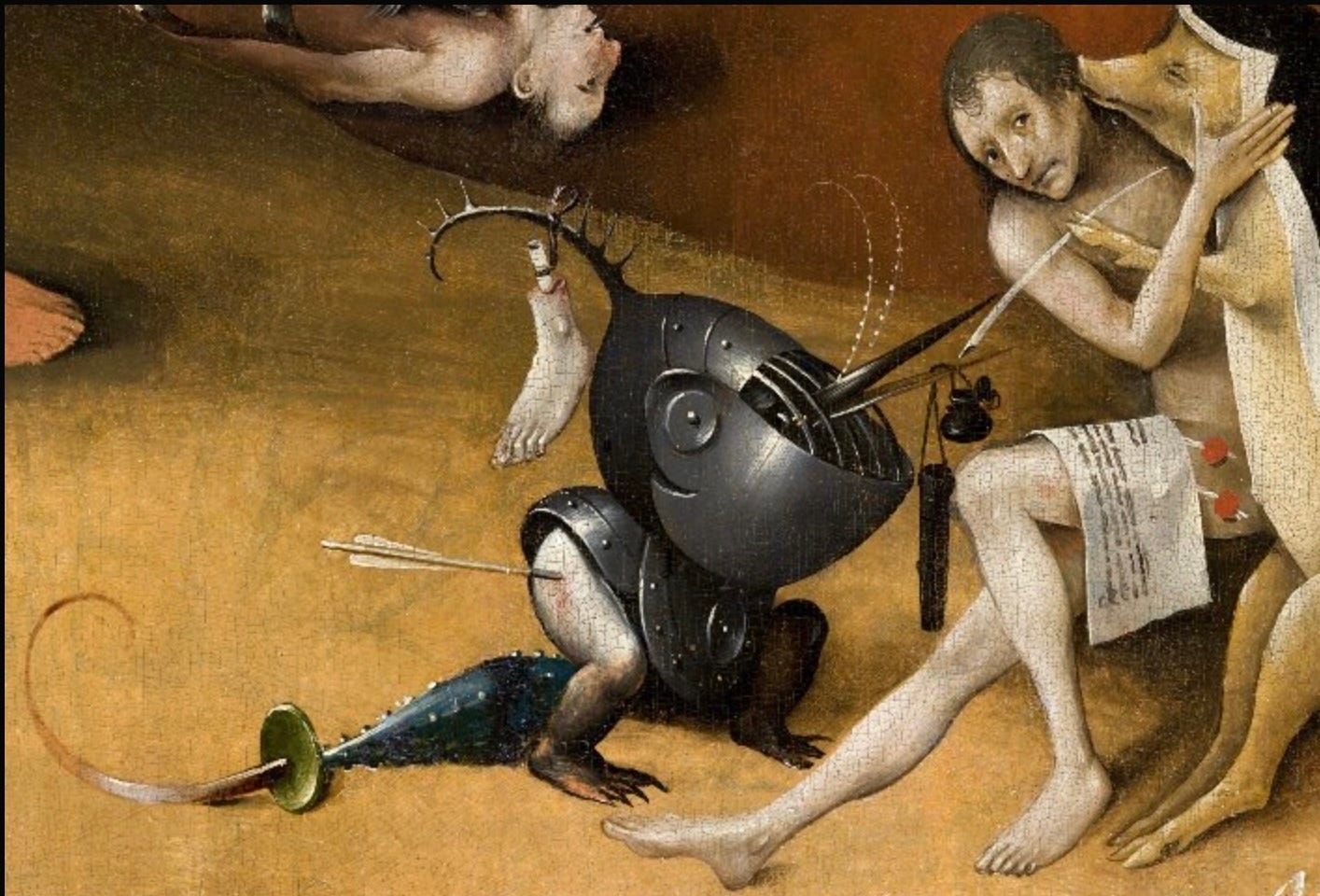
A grasshopper violates—voids—our categories. The creature looks like it sprouted from the brain of Hieronymus Bosch.
It is deeply alien.
But we are an insular species, which is why aliens often present themselves in more humanly acceptable guises. If the Little Green Men, the Insectoids, the Reptilians, or the Zeta Reticulans show themselves to us as they are, we would all freak out.
But it’s important to get used to the alien, to face whatever is strange, foreign, outlandish, even incomprehensible without allowing the fear to shut us down, mainly because close encounters with alien things lie at the heart of personal growth.
If one wants to learn anything new—and so develop oneself—one has to cross a border into unfamiliar, if not hostile, territory.
The world is stranger than we think, despite our furious efforts to domesticate it, to turn it into the commonplace, to repress its bite and danger—the savage strangeness of it.
I can hear my wife snickering about calling grasshoppers savage, but she hasn’t watched the YouTube videos of grasshoppers cannibalizing one another. When they swarm, they are running away—from one another!
But nature is a freak show, no matter how many sentimental commonplaces birdwatchers embroider on their pillows, no matter how completely the technophiles try to force it into the Olympian dispassion of data—all their tables, graphs, and infographics.
Sooner or later—even if only in death—we eat the heart of the buffalo.
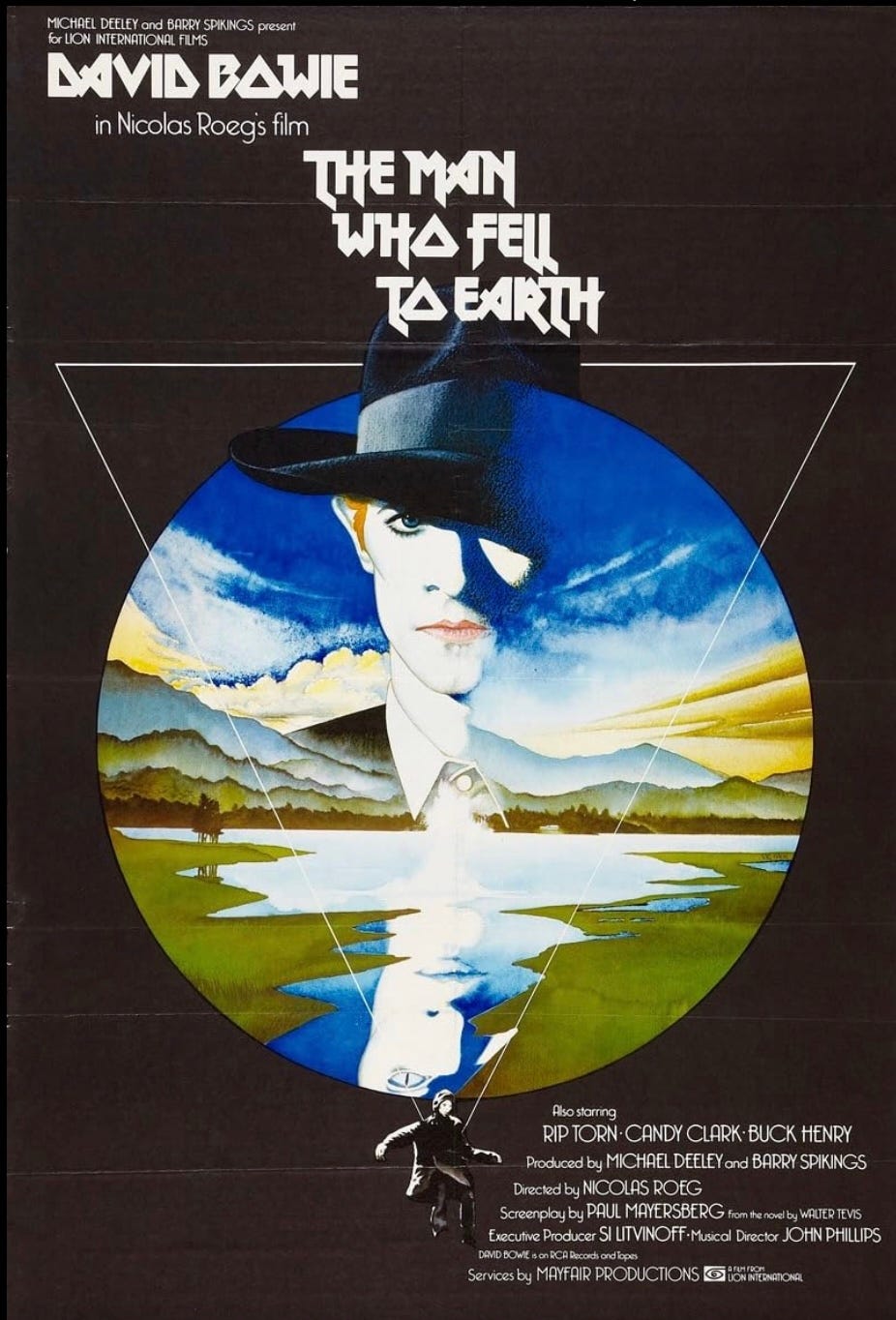
One of the reasons I like David Bowie, the English singer-songwriter, is that he worked the alien vibe deeply into his stage persona. He forces you to look into the face of the alien, to face our alien fear—and he knows how hard that is for all of us. As he put it:
There’s a Starman waiting in the sky
He’d like to come and meet us
But he thinks he’d blow our minds.
There’s a Starman waiting in the sky
He’s told us not to blow it
‘Cause he knows it’s all worthwhile
I can hardly put into words how much I loved this posting! Fabulous, thought provoking and so very creative. Thanks so much!
Turn and face the strange, ch ch ch changes!